· Sombra Team · Story · 3 min read
Why We Built Sombra
The problem we kept running into with screen-time apps, and why we decided to attach a real cost to breaking your bedtime.

Every screen-time app makes the same promise: set a limit, and the app will hold you to it. In practice, almost none of them do. There’s always a “remind me in 5 minutes,” an “ignore limit for today,” or a toggle buried three settings-menus deep that turns the whole thing off. The limit is real right up until the moment it’s inconvenient.
We hit that wall ourselves. Screen Time on iOS is genuinely well built, but it was designed to be overridable. It’s a parental-controls feature repurposed as a self-control feature, with an escape hatch built in by design. Every override we tapped past made the next one easier, until the limit wasn’t a limit anymore, just a notification we’d learned to dismiss.
By month two of trying to make Screen Time work for us, we weren’t disabling it because of some dramatic failure of willpower. We were disabling it the same boring way every time: tired, half-watching something, thumb moving faster than the decision to stop.
The problem in plain terms
Willpower-based tools fail for the same reason diets fail: the moment of temptation is exactly the moment your judgment is worst. Behavioral researchers have a name for this, the “hot-cold empathy gap”: the calm, rational version of you who sets a bedtime at 9am has almost nothing in common with the tired, dopamine-seeking version of you scrolling at 11:47pm. Asking “do you want to keep scrolling?” right as someone is mid-scroll isn’t a real deterrent. It’s a speed bump you’re already used to driving over.
Most screen-time tools are built around that 9am version of you, the one who sets thoughtful limits and genuinely means them. But they run at 11:47pm, against a different person entirely. The gap between those two people is where every screen-time app we tried quietly stopped working.
What we changed
Instead of asking you to resist, Sombra makes staying up past your bedtime cost something. Specifically:
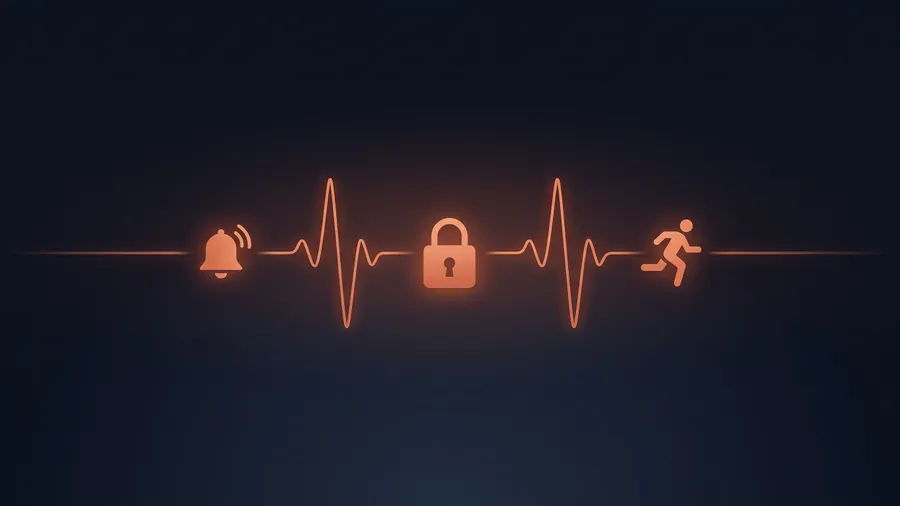
- Automatic bedtime tracking, no daily setup. Pick your bedtime and your apps once, and Sombra warns you and starts tracking every night without you touching a settings screen. There’s nothing to remember, which means there’s nothing to forget when you’re tired.
- A real-world cost for breaking it. Stay up too long and the price isn’t a guilt trip, it’s an actual walk, run, or workout, verified through Apple Health. Guilt is cheap and easy to ignore. A workout the next morning isn’t.
- Deliberate friction if you do get locked out. Skip a challenge and getting back in isn’t instant, because we’re not trying to lock anyone out of their phone forever. It’s just never one tap, the same way the override in every other app was one tap.
What we didn’t want to build
We also didn’t want to build a warden. Sombra never blocks you mid-scroll, and it never will. The 11pm version of you is still allowed to choose to keep scrolling; we just made sure that choice has a next-day price attached to it, instead of no price at all. That distinction matters to us. The goal isn’t obedience, it’s that the version of you who set the bedtime gets a say that actually holds up once the sun goes down.
Where we’re headed
This is the first version. Over the next few months we’re expanding the library of challenge types beyond walking and running, and starting work on an Android build so the same tracking works regardless of which phone you carry.
If that sounds like something you’d use, Sombra is live on iOS today, with a 7-day free trial on Sombra Pro so you can try it before you subscribe.